
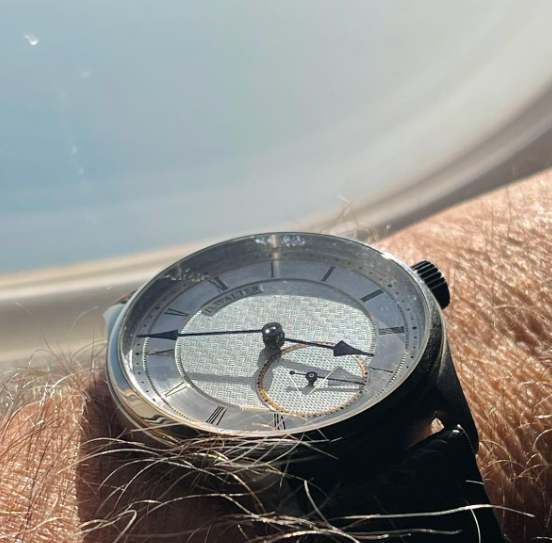
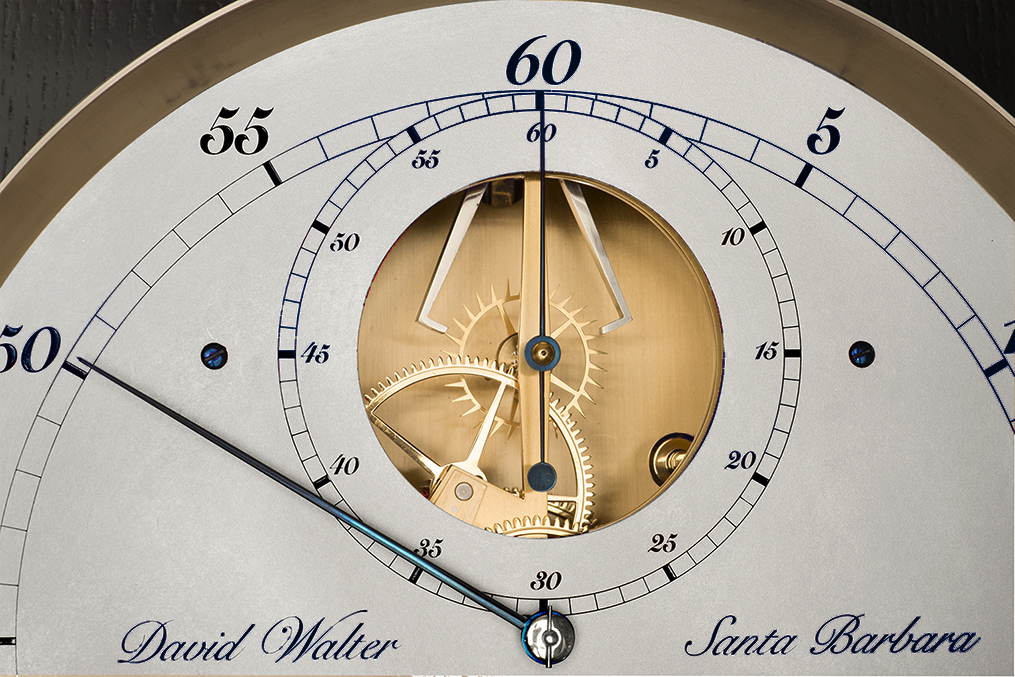

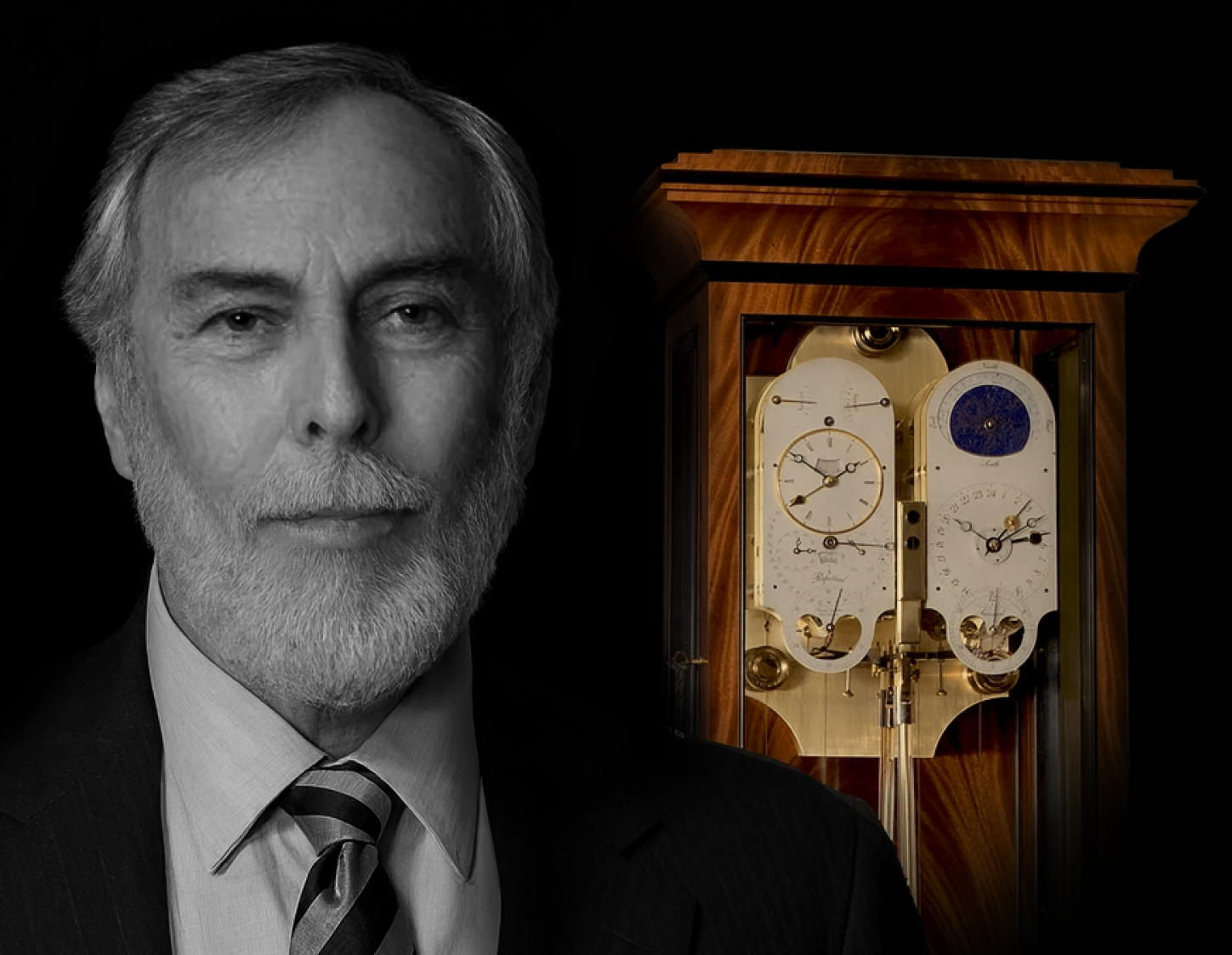
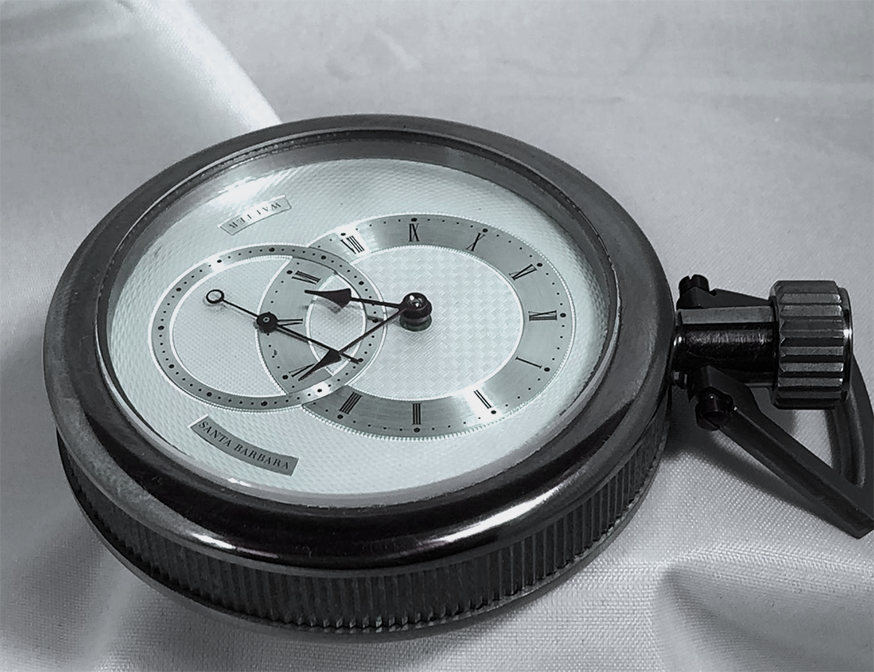

Abraham-Louis Breguet is often referred to as “the most famous watchmaker of all time,” yet this designation scarcely captures the breadth of his life, achievements, and influence. To understand Breguet fully, one must look beyond the brand he founded and explore the extraordinary life of the man himself—an exceptional scientist, engineer, and innovator in horology.
Breguet (1747, Neuchâtel, Switzerland – 1823, Paris, France) created inventions that profoundly shaped the watchmaking world. Among these are the tourbillon, an ingenious mechanism to counteract gravitational effects on timekeeping; the first wristwatch; and the elegantly designed Breguet “pomme” hands.
Beyond technical innovation, he initiated a neo-classical style in watchmaking, characterized by clarity, refinement, and legibility, which became a hallmark of his brand and influenced countless others.1 Today, Breguet remains synonymous with precision and elegance, a heritage carried forward under the Swatch Group since 1999, with modern innovations such as silicon balance springs and magnetic pivots reflecting the founder’s inventive spirit.2 The brand’s contemporary operations are located in the Vallée de Joux, the cradle of Swiss watchmaking, some 75 kilometers southwest of Neuchâtel.
Who Was Abraham-Louis Breguet?
Early Life and EducationAbraham-Louis Breguet was born to Jonas-Louis Breguet and Suzanne-Marguerite Bolle, descendants of French Protestants who had fled Catholic persecution after the revocation of the Edict of Nantes (1685).[ ^3 ]
The early loss of his father in 1758 interrupted his formal education, although his stepfather, Joseph Tattet, a Parisian watchmaker, would later expose him to the craft.3 Initially indifferent to watchmaking, young Breguet gradually embraced the craft, demonstrating precocious talent.
At age 15, he apprenticed under a master watchmaker in Versailles, the epicenter of horological innovation linked to the royal court. Concurrently, he attended evening classes at the Collège des Quatre-Nations (Collège Mazarin), excelling in mathematics and physics.
Mentorship by eminent watchmakers Ferdinand Berthoud and Jean-Antoine Lépine further honed his skills, exposing him to both technical mastery and innovative thinking.4
Royal Commissions and the Marie-Antoinette Watch
Through his teacher, Abbé Marie, Breguet was introduced to French nobility, ultimately gaining the patronage of King Louis XVI. His technical prowess led to commissions including one of the world’s first automatic watches, known as the Perpétuelle, sold in 1780 to the Duke of Orléans.5 Marie-Antoinette herself became a client, and Breguet’s reputation flourished.
Perhaps the most famous of Breguet’s creations is the No. 160 “Grand Complication”, widely known as the Marie-Antoinette. Contrary to popular belief, the queen did not commission the watch; rather, it was likely ordered by Swedish Count Hans Axel von Fersen, an admirer of hers. With 823 components incorporating every known complication of its time, its completion spanned decades, finalized by Breguet’s son Antoine-Louis in 1827, four years after Abraham-Louis Breguet’s death.6
Innovations and the Breguet Workshop
Opening his own atelier at Quai de l’Horloge in 1775 allowed Breguet to establish a distinctive aesthetic and explore technical advancements. Among his notable contributions are the blued “pomme” hands, characterized by long, slender forms that enhanced legibility—a radical departure from the ornate, baroque styles prevalent in his era.7

Other technical innovations included:
- The gong-spring minute repeater: Unlike earlier systems that relied on bells, Breguet introduced a spiral gong that produced a clearer and more resonant sound.
- The pare-chute: One of the earliest shock-absorbing devices for the balance staff, a precursor to modern Incabloc systems.
- The subscription watch: Simplified and affordable watches sold on a subscription basis, demonstrating Breguet’s foresight in market innovation.
As Emmanuel Breguet, Vice President of Patrimony, notes, Abraham-Louis “introduced clarity, space, and light” to watch design, combining scientific understanding with artistic sensibility.8
Exile and Political Turmoil
Breguet’s liberal political views, including membership in the Jacobins during the French Revolution, placed him in danger during the Reign of Terror. In 1793, he fled Paris under a safe-conduct facilitated by Jean-Paul Marat, a fellow Neuchâtelois. Despite political chaos, Breguet continued his intellectual pursuits, developing mechanisms and exchanging ideas with Swiss and English horologists, most notably John Arnold. This relationship proved significant, particularly concerning chronometer development and the eventual tourbillon.9
Return to Paris and the Tourbillon

Returning to Paris in 1795, Breguet restored his workshop and adapted to a changing clientele, now including the bourgeoisie and Napoleonic elite. During this period, he conceived the tourbillon, a mechanism designed to counteract gravitational errors in timekeeping. By mounting the balance and escapement in a rotating cage that completes a revolution once per minute, Breguet markedly improved the accuracy of pocket watches.10
The term “tourbillon” reflects Breguet’s Enlightenment-influenced perspective, invoking the orderly rotation of celestial bodies rather than meteorological phenomena. Inspired by Descartes and the Encyclopédie, Breguet approached horology with scientific rigor, naming his invention in accordance with both its technical function and its intellectual lineage.11
Legacy Abraham-Louis Breguet’s contributions extend beyond technical innovations; his aesthetic vision, scientific curiosity, and fearless engagement with social and political change established a paradigm in horology that continues to influence the field. Today, the Breguet brand embodies a dual commitment to heritage and innovation, a fitting continuation of its founder’s remarkable legacy.
References and Footnotes
- Daniels, George. Watchmaking. London: Philip Wilson Publishers, 1981. ↩
- Breguet, Emmanuel. Breguet: The Story of a Watchmaking House. Paris: Flammarion, 2003. ↩
- Ibid. ↩
- Brunner, Gisbert. Breguet. Köln: Taschen, 1999. ↩
- Ibid. ↩
- De Carle, Donald. Breguet: Watchmakers to Kings. London: Herbert Jenkins, 1972. ↩
- Daniels, George. The Art of Breguet Hands. Horological Journal, 1980. ↩
- Interview with Emmanuel Breguet, Breguet Museum, Paris, 2017. ↩
- Arnold, John. Chronometers and Their History. London, 1794. ↩
- Ibid; Daniels, 1981. ↩
- Landes, 1983; Breguet, 2003. ↩
